Smoke, Grease, and the One: Confessions From the Cookout Where Funk Goes to Live Forever
Photo: Line Omey, CC BY-SA 3.0, via Wikimedia Commons
Somewhere between the second plate of potato salad and the moment the sun starts leaning west, it happens. Somebody's uncle — let's call him Big Ray, because every gathering has a Big Ray — leans back in his lawn chair, points his spatula at the speaker like it owes him a testimony, and says the five most important words in American music preservation:
"Now THIS right here. This."
And whatever's playing at that moment — usually something with a snap of a drumbeat and a bassline that walks in like it owns the yard — just got inducted into the canon. Not by a critic. Not by a streaming algorithm. By a man holding tongs.
The Museum Has No Velvet Ropes, Just Folding Chairs
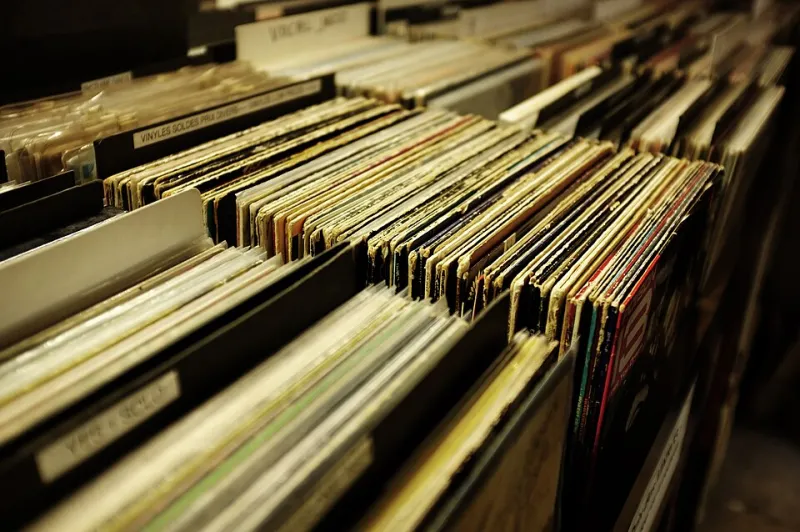
We spend a lot of ink on vinyl shops, DJ crates, and reissue campaigns as the guardians of funk and boogie. And sure, those matter. But the real archive? It's smoking meat in a backyard in Houston, Cleveland, Detroit, or that one cousin's house outside Atlanta where the extension cord runs out the kitchen window to power a speaker older than half the guests.
The cookout is a living museum with a rotating docent staff. Grandma hums a Chaka Khan line and suddenly a ten-year-old is asking who that is. An auntie queues up Zapp and delivers a fifteen-second lecture on Dayton, Ohio that no school curriculum ever bothered to include. The gap between "Baby Shark" and a lifelong boogie habit is roughly one summer afternoon with the right relatives.
Nobody hands out pamphlets. There's no admission fee — although you WILL be asked to bring ice and you WILL forget. The transfer of knowledge happens sideways, through smell and smoke and a bassline riding over the sound of kids getting told to stop running near the grill.
The Boombox Lineage Is Unbroken
Here's a lineage worth tracing: the hi-fi console in the living room begat the boombox on the picnic table, which begat the Bluetooth speaker strapped to the fence post. The tech shrank; the mission didn't. Every generation has hauled whatever played loudest out to the yard, because funk was never really an indoor music. It needs air. It needs room for the bass to breathe and the cousins to argue.
And the speaker placement hasn't changed in fifty years. Always slightly off-center. Always one extension cord short of ideal. Always loud enough that the neighbor three houses down either joins the party or files a noise complaint — and honestly, both outcomes are on-brand for the genre.
Auntie Didn't Apply for the Job, But She Has It
Every cookout has a musical director, and it is never the person who volunteered. It's Auntie, who has held the aux (formerly the CD wallet, formerly the cassette case with the broken hinge) since roughly the Carter administration, and whose curation standards make Motown's quality control department look lax.
Her rules, which she has never once stated aloud but enforces with the quiet menace of a customs officer:
- No skipping Big Ray's song. He requested it in April.
- Nothing with a beat that drops. Beats don't drop at a cookout. Beats settle in, get comfortable, fix a plate.
- Every third or fourth song must be a boogie slow-burner so the elders can two-step without leaving their chairs.
- The cook gets final approval on anything played during the last thirty minutes of grilling. This is non-negotiable and legally binding in at least twelve states.
The Pitmasters' Theory: Music Sets the Cook Time
We talked to a handful of backyard pitmasters — the folks running the grill like it's mission control — and an unexpected pattern emerged. Nearly all of them insisted, without prompting, that the music dictates the cook.
"A rack of ribs is about four Ohio Players albums," one told me, dead serious, flipping a rack with the confidence of a surgeon. "You go by temperature, you'll rush it. You go by the record, it comes out right."
Another pitmaster in Memphis swears by a simple formula: brisket runs long, so you start with the mellow stuff — some mid-tempo boogie, maybe a little Leon Ware — and save the horn-heavy funk for when you're pulling it off the heat. "If 'Fire' comes on and the meat's not ready," he shrugged, "you've mismanaged your afternoon."
Is this science? Absolutely not. Is it more reliable than half the cooking apps on your phone? The pitmasters would argue yes, and honestly, the ribs back them up.
Building Your Own Cookout Canon: A Starter Guide
Want your backyard set to hold up under Auntie-level scrutiny? Here's the framework, honed over many afternoons of field research (someone had to eat all that food):
- The Arrival Hour (guests trickling in): Mid-tempo groovers. Earth, Wind & Fire, some Kool & the Gang, a little Slave. Nothing too demanding — people are still hugging.
- The Main Cook (peak smoke, peak sun): Full funk. Ohio Players, Parliament, the Bar-Kays. This is the meat of the set, literally.
- The Eating Window: Pull it back. Boogie cuts, smooth but never sleepy. Think Cameo's silkier side, some Rick James minus the chaos.
- The Golden Hour (plates done, chairs in a circle): The singalongs. The songs three generations know the words to. This is where the museum does its best work.
- The Wind-Down: Slow burners only. The evening's version of dessert.
Keep the Flame Lit
Funk survived the disco backlash, the synth takeover, and every format change from eight-track to streaming — and a lot of that survival happened on picnic tables, not in studios. The cookout is where the genre gets re-registered every summer, where a bassline becomes a family heirloom, where the archive breathes.
So this weekend, when the smoke starts rising and Big Ray points that spatula at the speaker, do your part. Don't skip. Don't rush the cook. And whatever Auntie queues up next —
Now THIS right here. This.
Drop your cookout canon in the comments. Auntie is taking requests, but she is not taking notes.