Nine Minutes or It Doesn't Count: The Extended 12-Inch as Funk's Lie Detector
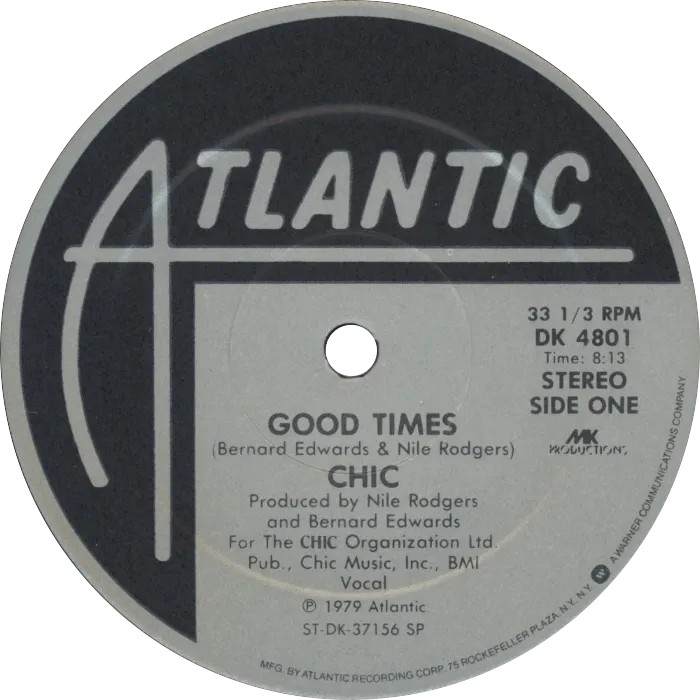
Photo: Atlantic Records, Public domain, via Wikimedia Commons
Here's a truth that every crate digger learns the hard way: the album cut is the audition, but the 12-inch is the job interview. Anyone can funk convincingly for three minutes and forty seconds. You get a tight horn chart, a snappy bridge, a chorus that hits right as the listener's attention starts to wander. It's like a movie trailer — cutting matters more than the material.
But flip that same song onto the extended mix, stretch it past the nine-minute mark, and suddenly you're not listening to a song anymore. You're sitting across the table from a groove, and it's either got something to say or it doesn't.
The Long Version Doesn't Forgive
The economics of the 12-inch single were simple: DJs needed longer tracks, labels wanted club play, and vinyl real estate allowed roughly eight to twelve minutes of groove per side at healthy volume. What the format accidentally created was a laboratory. Strip out the verse-chorus scaffolding, extend the breakdown, add a percussion break or a bass solo, and you find out fast whether there was ever a real engine under the hood.
A great extended edit doesn't just repeat. It develops. Listen to the long version of a track like Tyrone Brunson's "The Smurph" or the full 12-inch of Gap Band's "Early in the Morning" and you'll hear the arrangement thinking out loud — instruments dropping in and out, the bassline getting interrogated from new angles, the drums given just enough room to breathe before something pulls you back in. The song is a conversation, and the extended cut is where the interesting parts of the argument happen.
Now listen to a lazy one. You know the type: the album version looped an extra five minutes, breakdown pasted where a breakdown goes, fade-out pushed back until the engineer ran out of tape. It's funk-shaped but hollow, like a birthday cake made of frosting. The groove doesn't go anywhere because there was never anywhere to go.
Three Minutes Is a Costume. Nine Minutes Is a Body.
Think of it this way. A short funk song is a snapshot — everyone's posed, the lighting's good, the horn section is smiling. An extended cut is candid footage. Every player's individual chops get exposed. If the drummer can't vary the pattern for seven straight minutes without turning it into a coffee-break fill festival, the long version will rat them out. If the bassist only knows one riff, the DJ will know it before the second chorus of the extended mix arrives.
This is why so many of the great long versions are, frankly, better than the singles. Chic's "Good Times" runs over eight minutes on the 12-inch, and every extra second of Nile Rodgers' guitar and Bernard Edwards' bass feels less like padding and more like proof. The B-side of a well-made boogie 12-inch — the instrumental, the dub, the "percapella" — is where producers showed their homework. Zapp's long forms, Larry Levan's Paradise Garage edits, the Salsoul reworks by Tom Moulton: these weren't extensions, they were reconstructions. The song rebuilt for a dance floor at 2 a.m. when nobody's leaving and everybody's watching.
The lie detector metaphor isn't decorative. Extended cuts caught imposters the way a polygraph catches a nervous liar. Pop acts of the era who chased disco money in the late '70s often got handed to remixers, and the results were brutal: a shimmering three-minute single stretched into a sagging, directionless marathon that cleared dance floors faster than a fire alarm. The format had no patience for a groove that was all costume.
How to Spot the Real Thing in the Crate
So you're elbow-deep in a dollar bin in Detroit or a flea market outside Austin, and you spot a promo 12-inch with a generic sleeve. How do you know if it's a keeper before the needle drops?
Check the runtime first. Anything under six minutes is a radio edit wearing a club outfit. You want the 8-to-10-minute territory where the remixers lived.
Look for the names. Tom Moulton, John Luongo, Jim Burgess, Larry Levan, Tee Scott — if one of these guys handled the mix, the odds of a genuinely reimagined arrangement go way up. These were editors and DJs, not loop machines.
Read the label credits. "Special Disco Version" or "Long Version" stamped on a Motown, Salsoul, Prelude, or West End pressing is usually a good sign. Bonus points for a B-side instrumental — that's the version DJs actually beatmatched with.
The breakdown test. In your head, imagine the middle four minutes. Is there a plan? Percussion break, bass drop, filter ride, keys re-entry? If the only tool available was "repeat and fade," put it back in the crate and back away slowly.
The Playlist: Long Versions Worth Every Second
Build your next party's deep-cut segment around edits like these — all pressed to vinyl, all dance-floor tested:
- Chic — "Good Times" (12-inch version) — the gold standard for development over repetition
- Gap Band — "Early in the Morning" (extended) — a slow-burn groove that earns every one of its minutes
- Tyrone Brunson — "The Smurph" — bass as a lead character with a full arc
- Instant Funk — "I Got My Mind Made Up" (long version) — Gamble & Huff's Philly machine at maximum extension
- D-Train — "You're the One for Me" (12-inch) — early-'80s boogie that builds like a cathedral
- Sylvester — "You Make Me Feel (Mighty Real)" (12-inch mix) — Patrick Cowley's synths stretching the song into orbit
- Cameo — "She's Strange" (12-inch) — proof the extended cut worked just as well for the next generation
The Bottom Line
Funk isn't a tempo, a fashion choice, or a horn stab you can sample. It's stamina. It's the willingness of a rhythm section to hold a feeling in the air long past the point where a pop song would've flinched. The extended 12-inch was the format that demanded that stamina on record — and forty-plus years later, it's still the most honest test we've got.
So the next time someone tells you a three-minute single is "real funk," hand them the 12-inch. If the groove survives nine minutes, congratulations — you're holding the genuine article. If it doesn't, well, at least the dollar bin will take it back.